
Partition Type GRP Tanks – Design & Installation Insights | Aquosys Limited

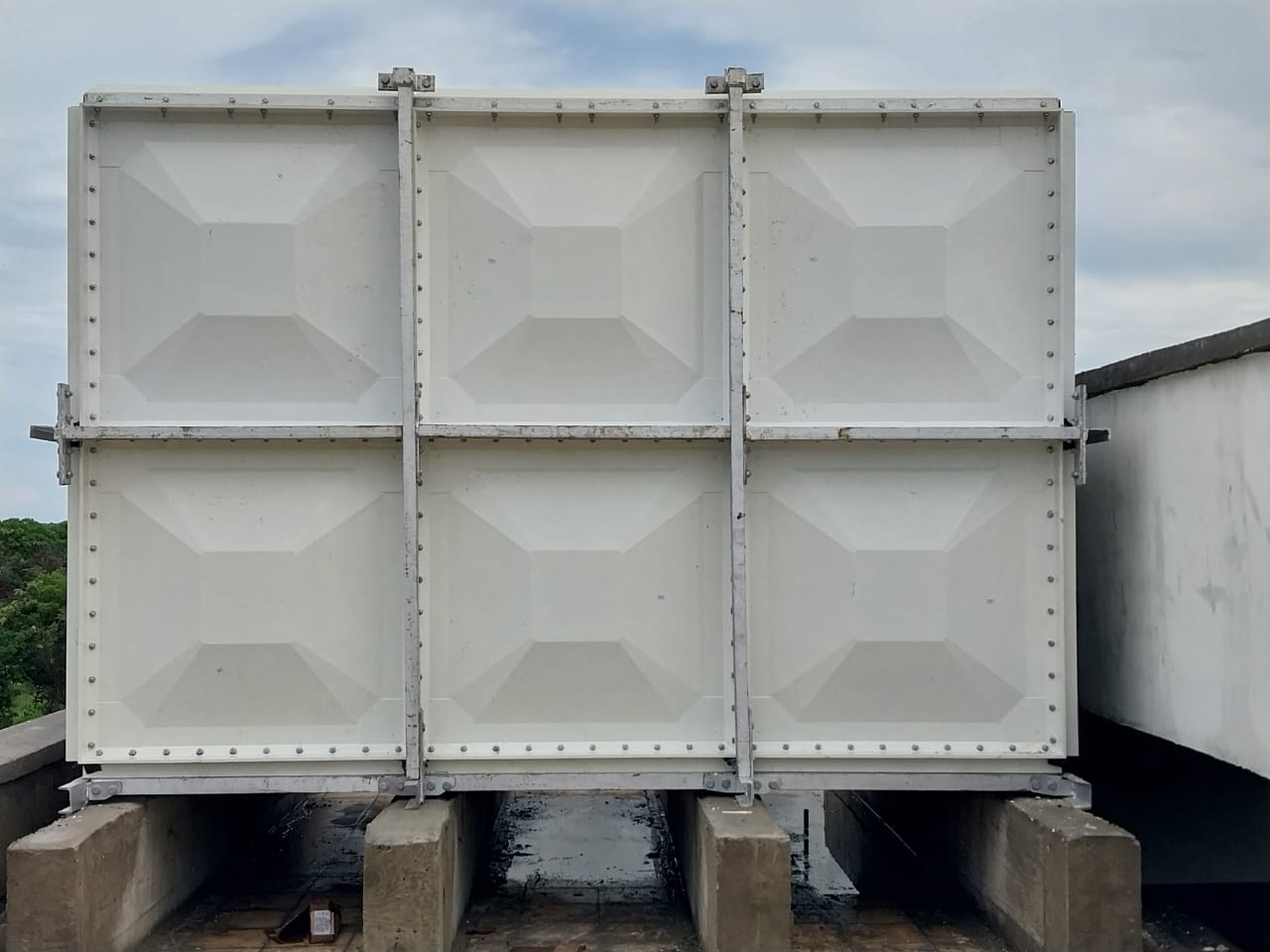
Partition Type GRP Tanks – Design & Installation Insights | Aquosys Limited
Partition Type Tanks: What Engineers Need to Know Before Installation
Introduction
In modern water infrastructure, GRP sectional tanks offer unmatched flexibility and scalability. For large-capacity projects—such as municipal water supply, hospitals, schools, industrial complexes, and high-rise buildings—partition type GRP tanks are a smart engineering solution.
They allow multiple compartments within a single tank structure, making it easier to manage separate water zones, perform maintenance, or store different water sources (e.g., potable vs. non-potable).
In this guide, we’ll explore how partition type GRP tanks work, their design principles, installation considerations, and what engineers should know before specifying them in a project.
💧 What Are Partition Type GRP Tanks?
A partition type GRP tank is a single large sectional tank divided internally into two or more compartments using GRP partition walls.
Each compartment functions independently, with separate inlets, outlets, and overflow systems, allowing one section to be isolated while the other remains operational.
🔩 Key Design Features:
-
Constructed from GRP panels bolted together
-
Internal partition walls create multiple compartments
-
Shared external structure, reducing space and cost
-
Ideal for continuous water supply and easy maintenance
🔗 Learn more about partition types
⚙️ Why Engineers Choose Partition Type Tanks
✅ 1. Continuous Water Supply
During maintenance or cleaning, one compartment can be drained while others stay online—ensuring uninterrupted supply to buildings or facilities.
✅ 2. Efficient Space Utilization
Instead of building multiple separate tanks, partitions allow engineers to store different water zones in a single footprint—ideal for basement or rooftop installations.
✅ 3. Cost Savings
Shared external walls and reinforcements mean fewer materials and simpler installation, leading to lower construction and labor costs.
✅ 4. Versatility
Partitions can store:
-
Potable water vs. non-potable water
-
Firefighting reserves vs. domestic supply
-
Different temperature zones (when insulated)
🔗 See how GRP tanks can be customized
📏 Design Considerations for Partition Tanks
Before installation, engineers should account for several design factors:
🧱 1. Compartment Layout
Decide on the number of compartments and capacity distribution based on supply needs, building use, and maintenance cycles.
🧰 2. Hydraulic Separation
Each compartment should have independent inlets, outlets, and overflows to prevent cross-contamination or unequal pressure.
🌡️ 3. Insulation and Temperature Control
For projects requiring thermal stability, consider insulated panels or partition barriers that maintain separate temperature zones.
🔩 4. Reinforcement
Choose between internal or external tie rod systems to maintain structural integrity. Larger tanks may require external reinforcements.
🔗 Read about reinforcement systems
⚖️ 5. Load Distribution
Ensure the foundation supports the combined load of all compartments—especially when filled unevenly.
🔍 6. Access and Maintenance
Design for access hatches and manholes in each partition to enable safe inspection, cleaning, and maintenance.
🧠 Engineering Best Practices
🧰 Structural Stability
Use finite element analysis (FEA) to model how internal walls handle hydrostatic pressure from adjacent compartments.
💧 Leakage Prevention
Proper use of gaskets, sealants, and precision bolting is essential to prevent cross-leakage between partitions.
🧼 Hygiene Compliance
For potable water storage, all compartments must meet hygienic GRP standards, preventing algae or bacterial growth.
🔗 See GRP hygienic characteristics
🧾 Regulatory Standards
Follow international standards such as:
-
BS 1564: GRP Tanks for Potable Water
-
ISO 9001: Quality Management
-
Local water authority specifications
🏗️ Applications of Partition Type Tanks
Partitioned GRP tanks are ideal for:
-
🏢 Commercial complexes with multiple water zones
-
🏫 Schools needing separate domestic and fire reserves
-
🏥 Hospitals requiring backup storage
-
🏠 High-rise apartments with dual supply systems
-
💧 Municipal or industrial plants with continuous operation needs
🔗 View Aquosys project portfolio
🛠️ Installation Checklist for Engineers
Before installation, ensure:
✔ A level, reinforced concrete foundation
✔ Adequate access space for assembly
✔ Proper alignment of partition walls
✔ Independent valves and pipework for each section
✔ Hydrostatic testing after assembly
✔ Final inspection and certification
🔗 Read full installation guide
🧰 Maintenance Tips
To extend the lifespan of your partitioned GRP tank:
-
Inspect joints and seals annually
-
Clean each compartment regularly
-
Test for leaks or cross-flow between partitions
-
Replace gaskets or bolts if worn
-
Keep access covers sealed to prevent contamination
💡 Why Aquosys Limited is Your GRP Partner
At Aquosys Limited, we specialize in custom GRP sectional tanks with partition options for every scale. Our engineering team provides:
✔ Tailored design for your capacity and layout
✔ On-site installation with precision assembly
✔ High-quality GRP panels built for hygiene and durability
✔ After-sales maintenance and technical support
Serving Kenya, Uganda, Tanzania, Rwanda, Ethiopia, and South Sudan.
📞 Contact Us
Aquosys Limited
📧 sales@aquosys.co.ke
📞 +254 754 750 750 | +254 729 749 749
🌐 Get in Touch

