Installation Best Practices for GRP Tanks: A Complete Guide

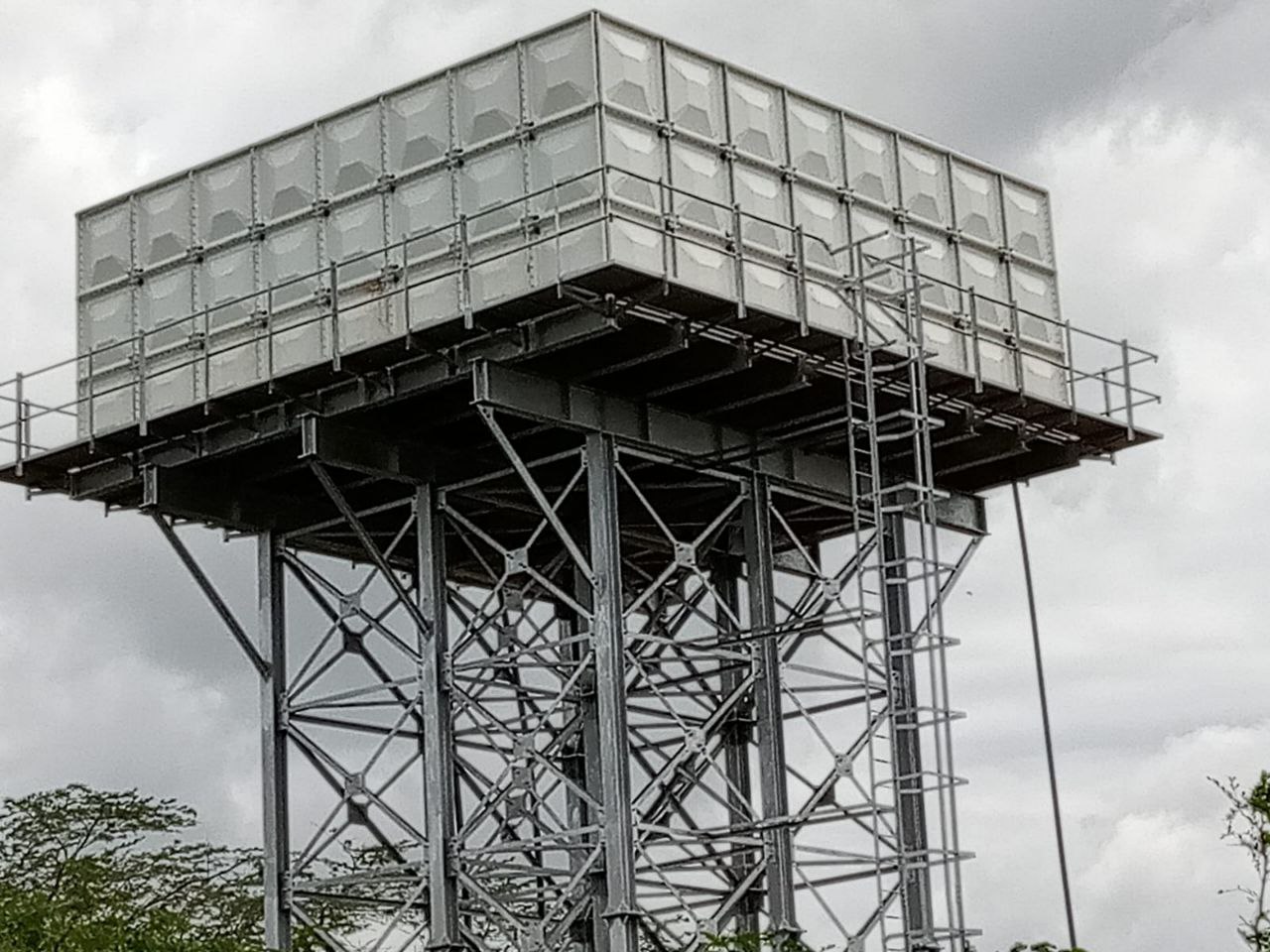
Installation Best Practices for GRP Tanks: A Complete Guide
Installing GRP (Glass Reinforced Plastic) water tanks correctly is essential to ensure their long-term performance, safety, and reliability. Even the most durable tank can underperform or fail if installation procedures are ignored or poorly executed.
Whether you’re working on a municipal water project, industrial facility, school, hospital, or high-rise development, following best installation practices will help you get the most out of your GRP sectional water tank.
In this comprehensive guide, we’ll walk through the step-by-step installation process, site preparation, key precautions, and long-term maintenance tips — based on the expertise of Aquosys Limited, East Africa’s leading GRP tank manufacturer and installer.
🔹 What Makes GRP Tanks Unique?
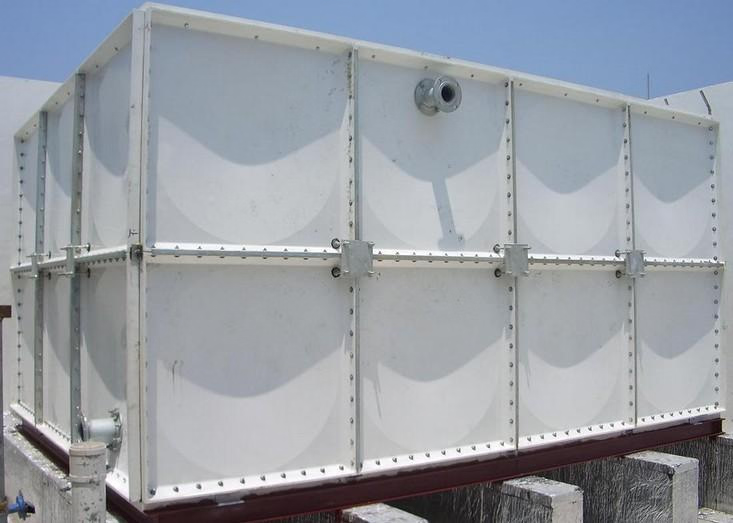
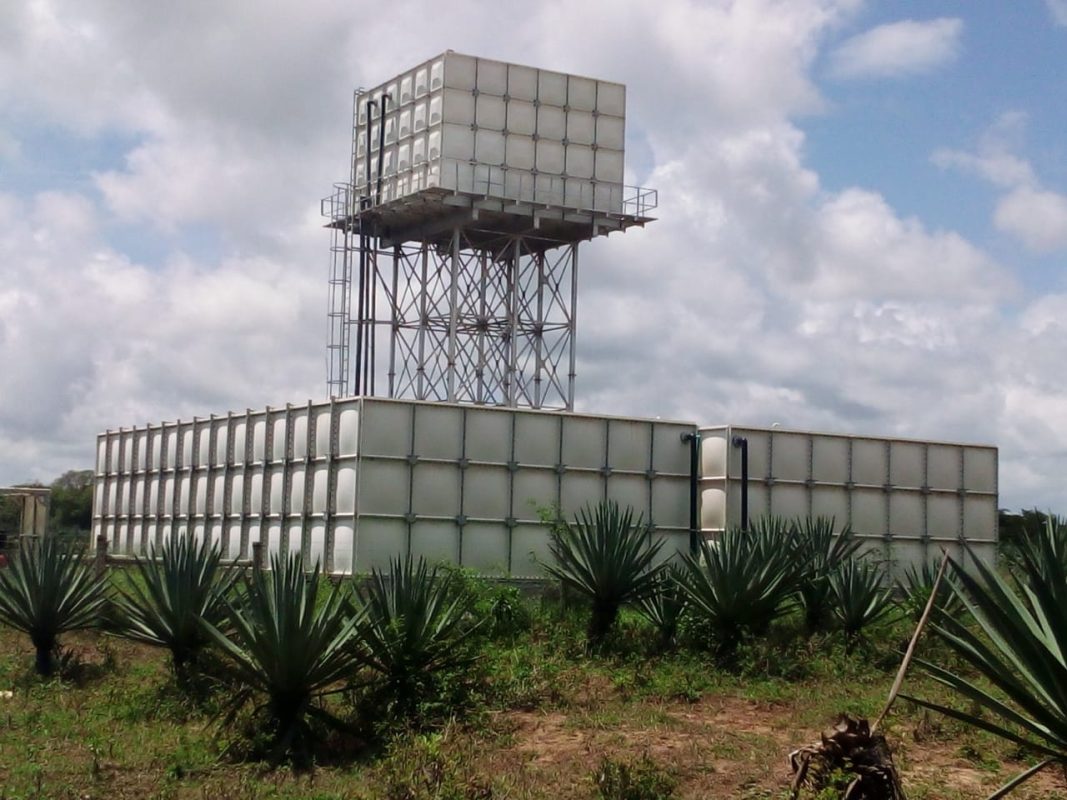
GRP tanks are made from Glass Reinforced Plastic — a composite material combining fiberglass and resin. This gives them exceptional strength, light weight, corrosion resistance, and hygiene, making them ideal for potable water storage and industrial applications.
Unlike traditional steel or concrete tanks, GRP tanks are:
-
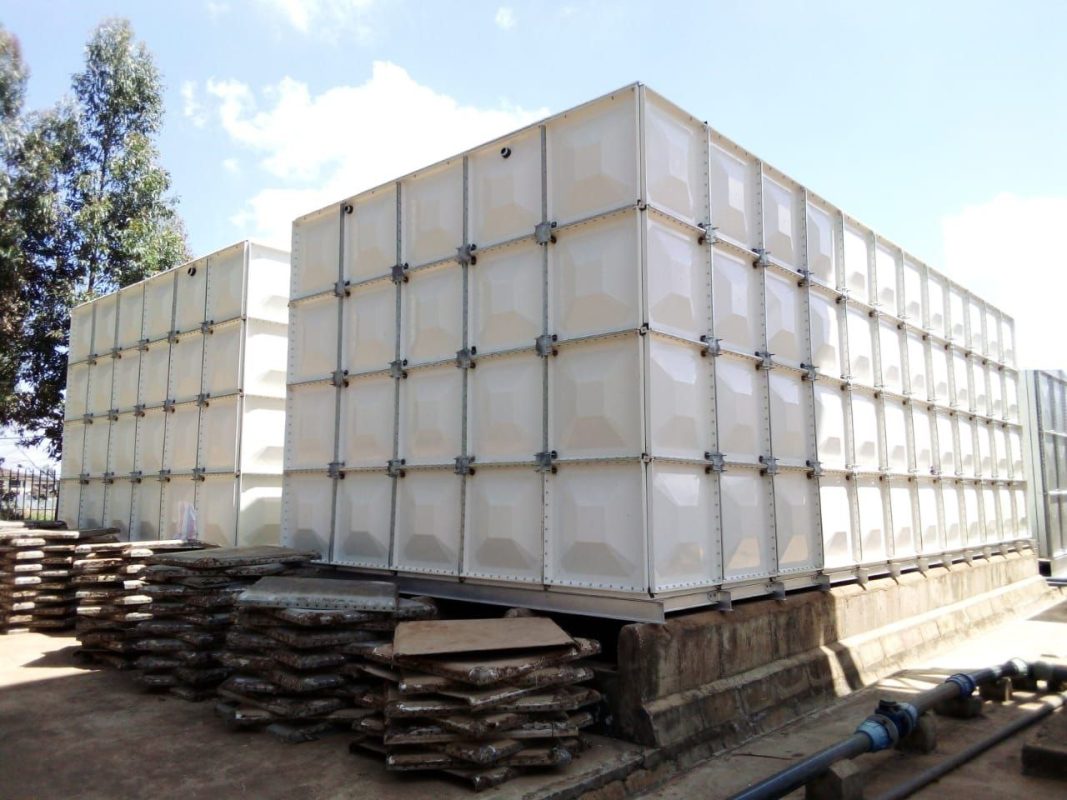
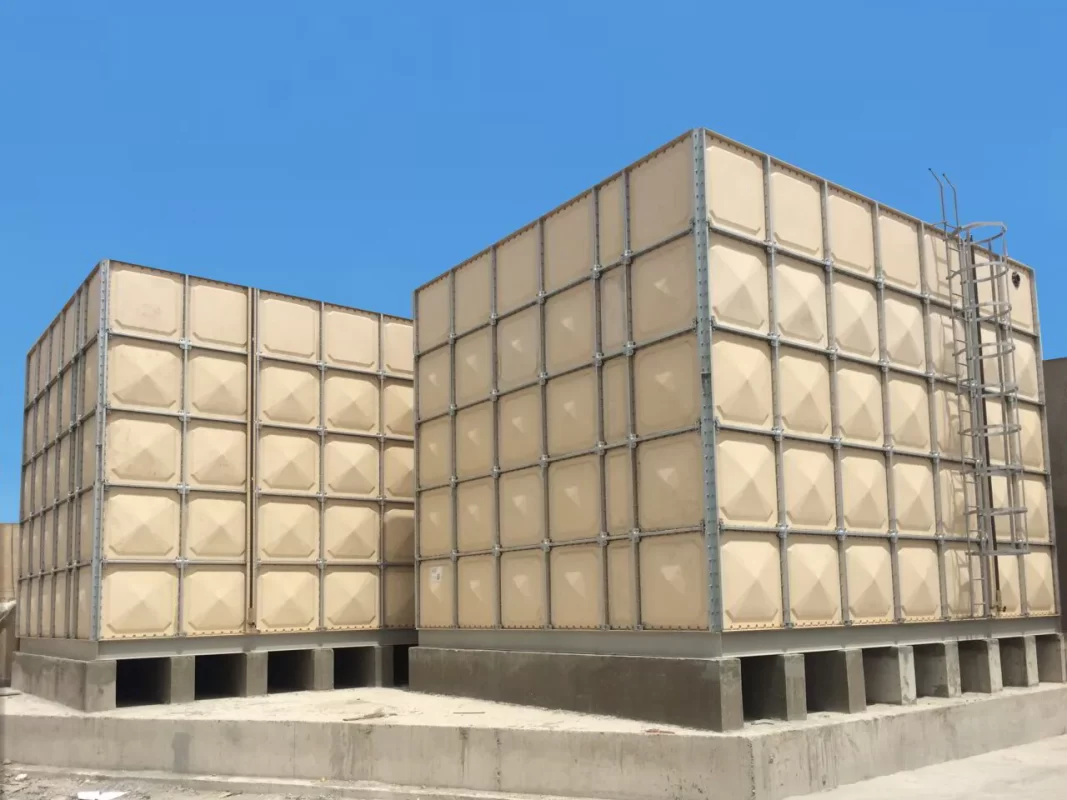
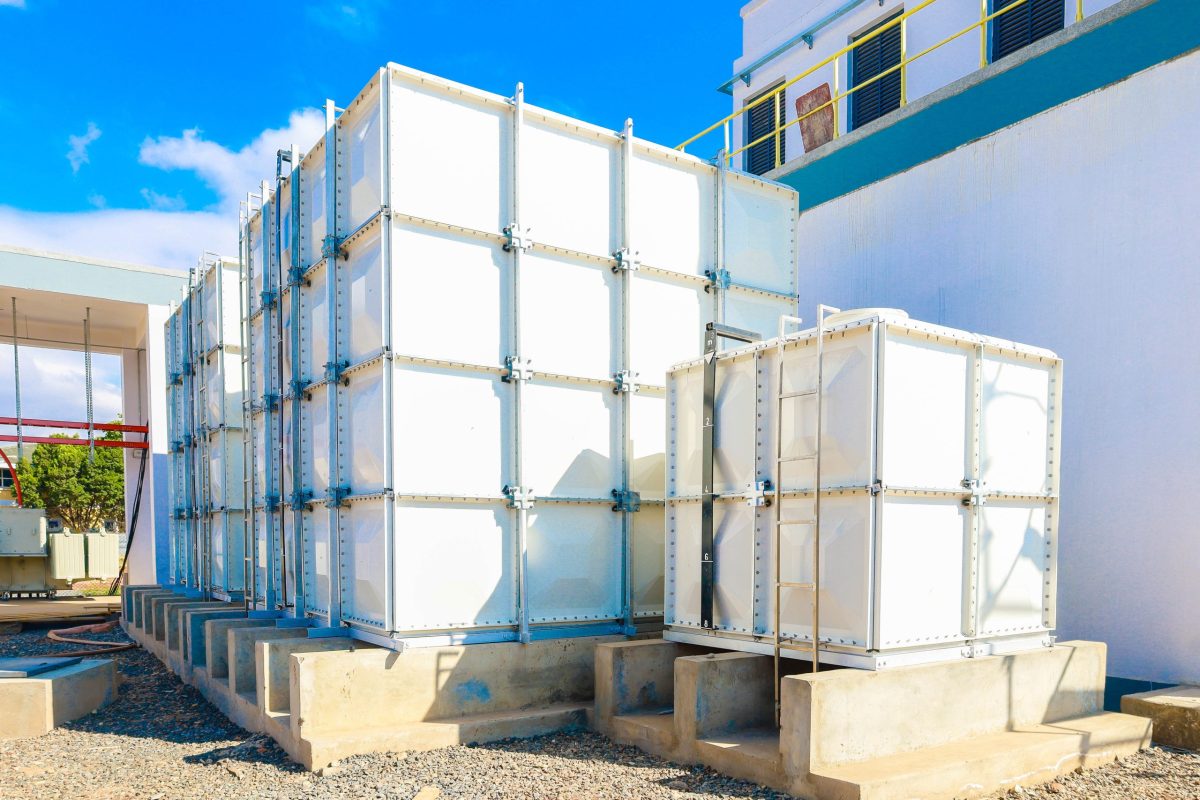
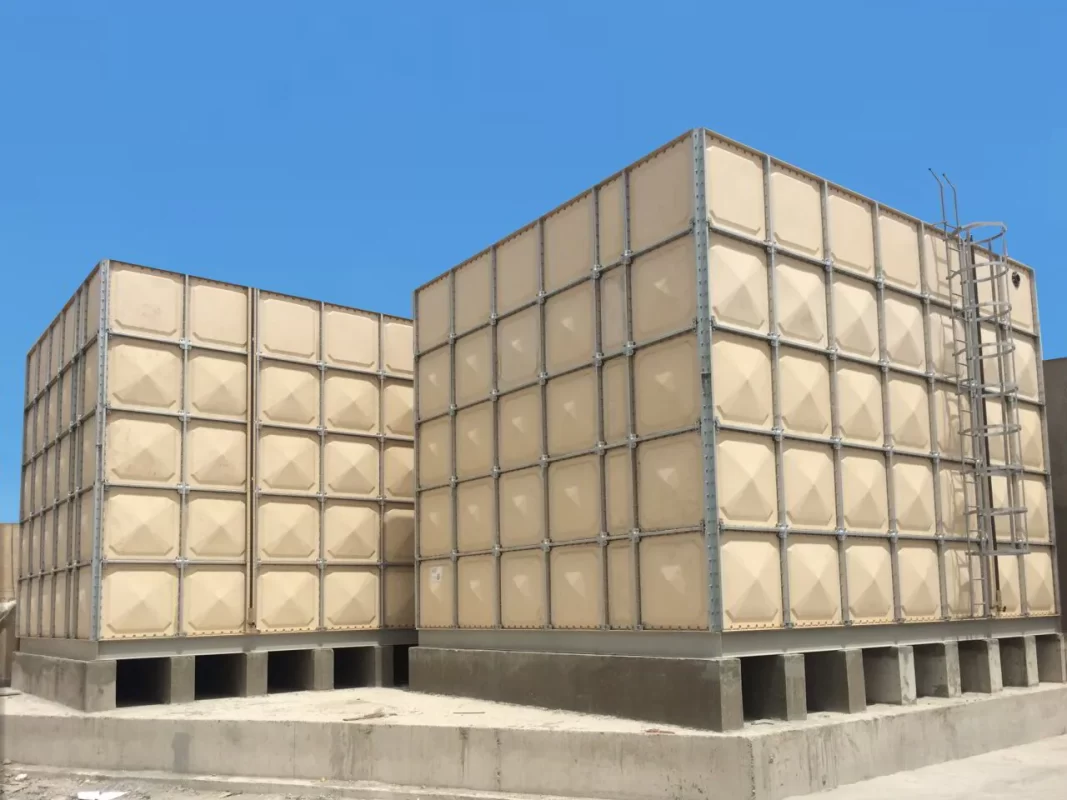
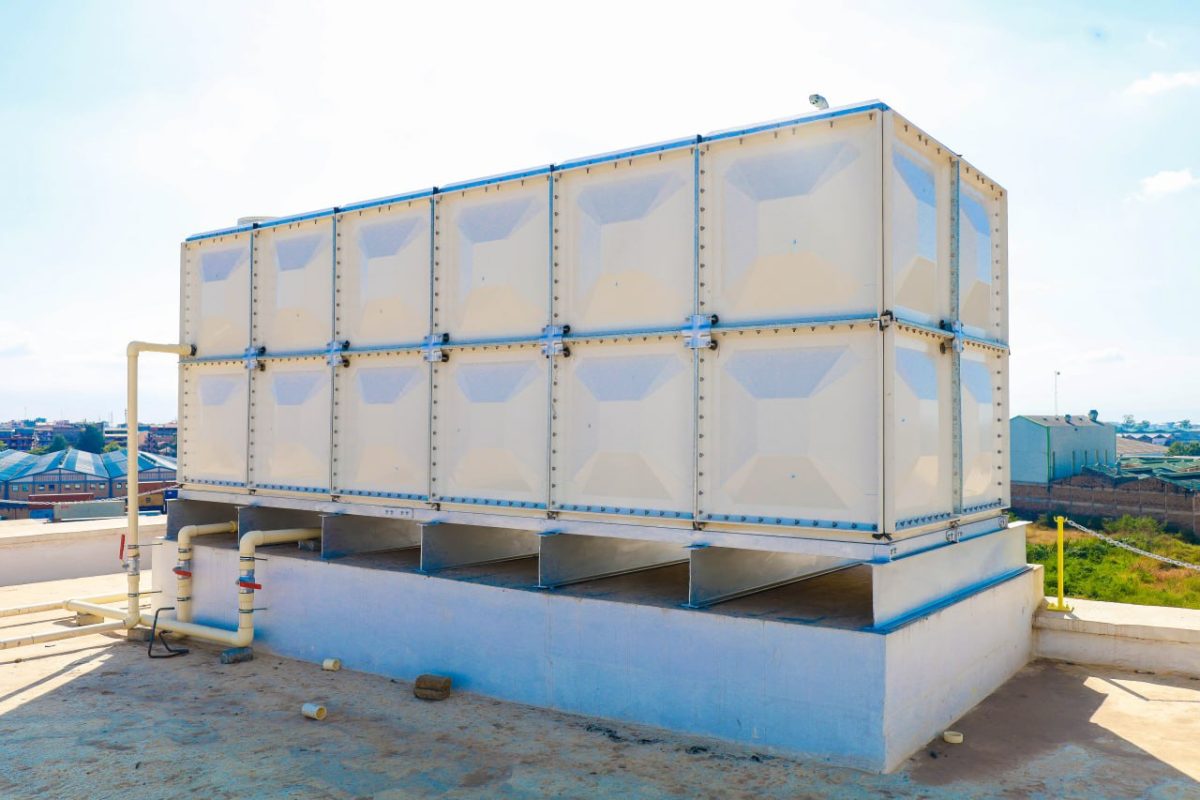
✅ Modular – delivered as panels and assembled on-site
-
✅ Customizable – built to fit unique site requirements
-
✅ Long-lasting – resistant to corrosion, UV rays, and temperature fluctuations
-
✅ Low maintenance – minimal cleaning and repair needs
To ensure these benefits last decades, proper installation is crucial.
🔹 Step-by-Step GRP Tank Installation Process
1. Site Assessment and Design Planning
Before installation begins, conduct a thorough site survey. Evaluate:
-
Space and accessibility for transport and assembly
-
Ground conditions and load-bearing capacity
-
Environmental factors (temperature, sunlight, exposure)
This helps determine:
-
Tank dimensions and capacity
-
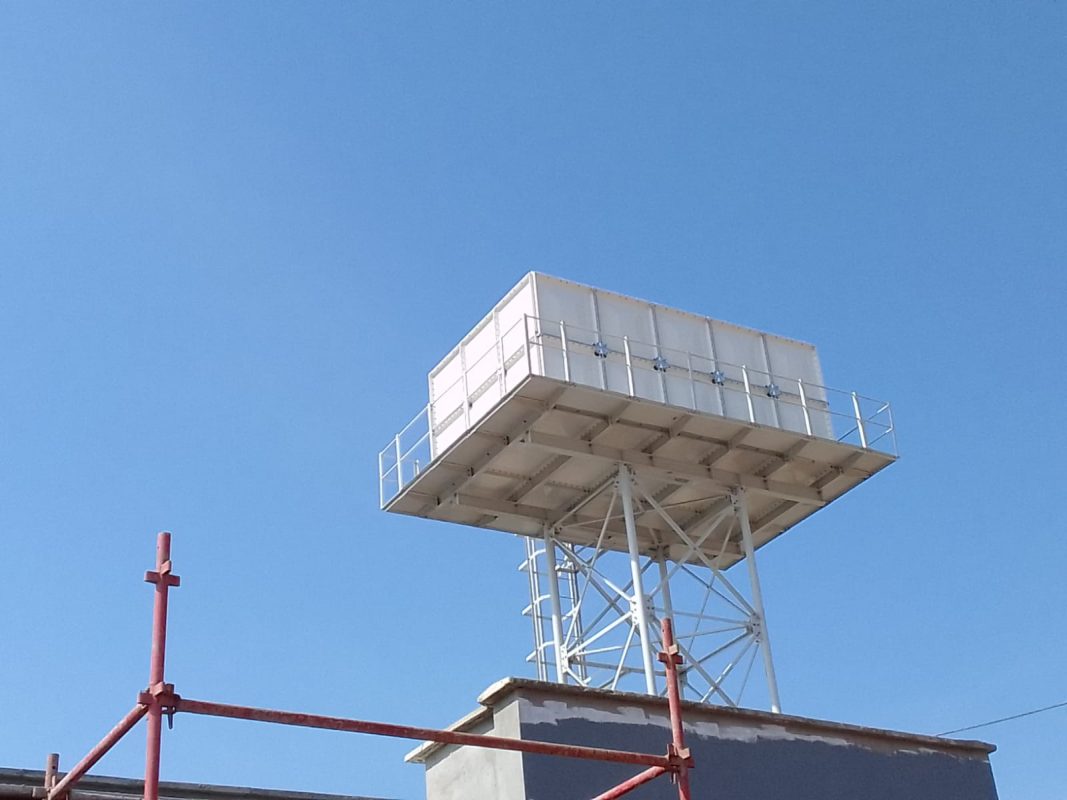
Base design (concrete or steel)
-
Required reinforcement and insulation
📘 Learn more about GRP Panel Characteristics.
2. Foundation and Base Preparation
A strong, level foundation is essential. Poor bases cause uneven loading, leading to cracks or leaks.
Best practices for the base:
-
Use reinforced concrete slab or steel structure
-
Ensure the surface is flat and smooth
-
Minimum compressive strength: 25 N/mm²
-
Level tolerance: ±2mm across tank footprint
-
Include drainage channels to prevent water accumulation
📘 See detailed Installation Guidelines.
3. Delivery and Panel Inspection
When GRP panels arrive:
-
Inspect for damage or warping
-
Store in a dry, shaded area
-
Avoid stacking panels on rough surfaces
-
Keep accessories (bolts, gaskets, flanges) organized
Follow Aquosys’s Caution & Handling Instructions to prevent damage during unloading.
4. Assembly of Bottom Panels
Start installation with bottom panels:
-
Lay out panels according to the tank’s footprint
-
Align precisely and tighten bolts with uniform torque
-
Use rubber gaskets between joints for watertight seals
Ensure proper alignment — errors here affect the entire tank.
5. Installing Side and Corner Panels
-
Erect side panels row by row, starting with corners
-
Use stainless steel bolts and washers
-
Maintain vertical alignment with plumb line
-
Tighten evenly to avoid stress points
For large tanks, additional internal tie-rods or stiffeners may be used for structural integrity.
📘 Explore Reinforcement Options.
6. Roof and Access Fittings
Once walls are up, install:
-
Roof panels (optional for open tanks)
-
Manholes for inspection and cleaning
-
Air vents, overflow pipes, and inlet/outlet fittings
Proper sealing prevents contamination and maintains hygiene.
7. Internal Bracing and Partitioning
To ensure strength under load, install:
-
Tie rods across panels
-
Partition plates if multiple chambers are needed
📘 See available Partition Types.
8. Sealing and Waterproofing
-
Double-check all bolt joints and gaskets
-
Apply sealant to potential leak points
-
Fill tank partially to test for leakages
9. Hydrostatic Testing
Before full operation:
-
Fill tank with water to test pressure and leaks
-
Monitor for 24–48 hours
-
Correct any leaks immediately
This ensures integrity and safety before commissioning.
10. Cleaning and Commissioning
-
Clean internal surfaces with approved disinfectant
-
Flush system before connecting to supply
-
Verify fittings, valves, and overflow alignment
Your tank is now ready for use!
🔹 Key Best Practices During Installation
-
✅ Follow Manufacturer Guidelines – Use Aquosys’s official instructions for panel assembly and tightening.
-
✅ Use Skilled Technicians – GRP assembly requires precision; rely on trained personnel.
-
✅ Maintain Cleanliness – Keep panels clean during installation to prevent contamination.
-
✅ Avoid Over-Tightening – Excess torque can damage fiberglass panels.
-
✅ Inspect Gaskets – Ensure uniform thickness and correct placement.
-
✅ Allow for Thermal Expansion – Design clearances for expansion under heat.
-
✅ Protect from UV – Apply coatings or covers if tank is in full sunlight.
🔹 Common Mistakes to Avoid
🚫 Installing on uneven or weak foundations
🚫 Using non-standard bolts or gaskets
🚫 Failing to conduct hydrostatic tests
🚫 Skipping internal bracing for large tanks
🚫 Neglecting overflow and vent fittings
🚫 Ignoring insulation in extreme climates
These mistakes can cause leaks, structural failure, or contamination — all avoidable with professional installation.
🔹 Importance of Professional Installation
Partnering with experienced installers like Aquosys Limited ensures:
-
Compliance with international standards
-
Correct assembly techniques
-
Proper reinforcement and bracing
-
Warranty protection and after-sales service
📘 Explore Aquosys’s Installation Services.
🔹 Insulation & Temperature Control
In regions with extreme temperatures, insulation is vital for:
-
Maintaining water temperature
-
Preventing algae growth
-
Extending tank lifespan
Aquosys offers specialized Insulation Options for GRP tanks.
🔹 Long-Term Maintenance Tips
After installation, follow these maintenance steps:
-
🧽 Clean every 6–12 months
-
🔍 Inspect bolts and joints for leaks
-
💧 Check water quality periodically
-
🧰 Lubricate fittings if necessary
-
🚫 Avoid overloading or modifying structure
With proper care, GRP tanks last 25+ years.
🔹 Applications That Require Precision Installation
-
🏢 High-rise building water storage
-
🏭 Industrial process tanks
-
🏫 Institutional supply tanks
-
🏥 Hospitals and clinics
-
💧 Municipal and rural water projects
Browse real-life examples in our Portfolio and Gallery.
🔹 Why Choose Aquosys Limited?
Aquosys Limited is East Africa’s trusted expert in GRP water storage systems.
We provide end-to-end solutions — from design and manufacture to installation and maintenance.
🌍 Serving Kenya, Uganda, Tanzania, Rwanda, South Sudan, and Ethiopia.
✅ Why Clients Trust Us:
-
Certified GRP panel technology
-
Experienced engineering team
-
Custom designs for large-scale projects
-
Proven track record across sectors
📘 Learn About Us.
📞 Request a Quote or Get in Touch
Ready to install a reliable, durable GRP water tank?
Aquosys Limited
📧 sales@aquosys.co.ke
📞 +254 754 750 750 | +254 729 749 749
🌐 Get in Touch
COUNTRYWIDE PROJECT SUPPORT AVAILABLE
✔ Expert installation & engineering support
✔ Large-scale & custom designs available
✔ Serving Kenya, Uganda, Tanzania, Rwanda, South Sudan, Ethiopia & beyond