GRP Tank Reinforcement Explained – Internal vs External Tie Rods

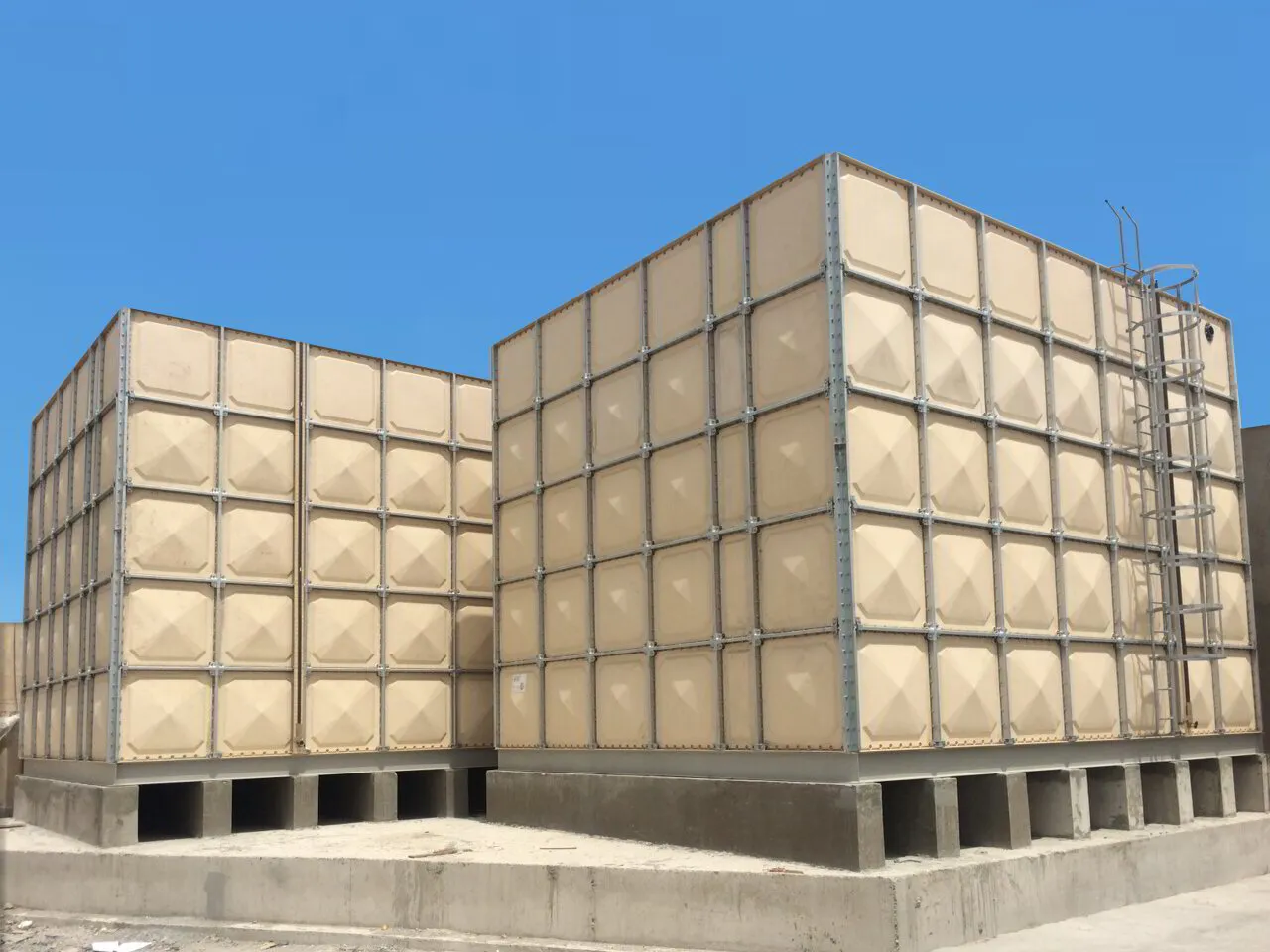
GRP Tank Reinforcement Explained – Internal vs External Tie Rods
GRP Tank Reinforcement Types Explained: Internal vs External Tie Rods
Introduction
When designing sectional GRP (Glass Reinforced Plastic) water tanks for large-capacity storage, structural reinforcement plays a crucial role in ensuring stability, leak-proof performance, and long-term durability. Because GRP panels are lightweight yet strong, they require proper reinforcement systems to withstand water pressure and external forces.
Two primary reinforcement methods are used in GRP tank engineering:
-
Internal Tie Rods
-
External Tie Rods
In this guide, we’ll break down how each reinforcement system works, their advantages, applications, and how Aquosys Limited helps you select the right design based on your project size, site conditions, and installation needs.
⚙️ Why GRP Tanks Need Reinforcement
Unlike concrete or steel tanks, GRP sectional tanks are assembled using bolted panels. Once installed, the panels must withstand:
-
Hydrostatic pressure (water pushing outward)
-
Environmental stress (wind, temperature, vibrations)
-
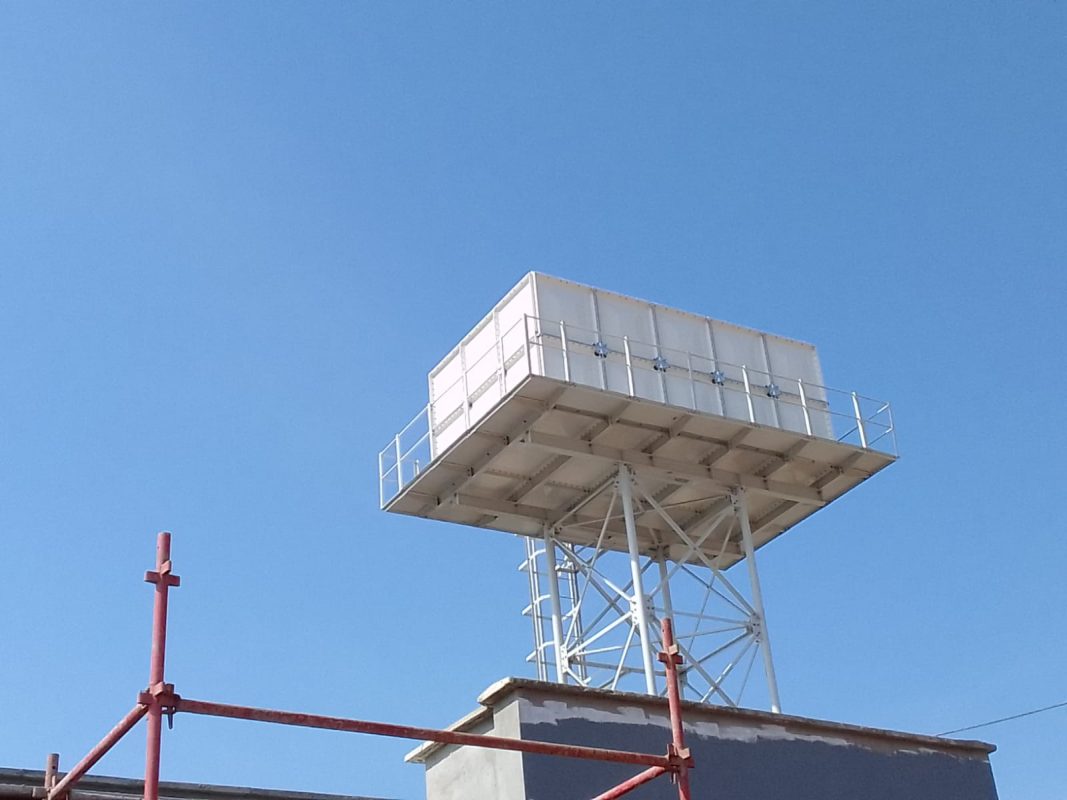
Load from covers and walkways
Without proper reinforcement, panel deformation, joint leakage, or structural failure could occur over time. Hence, tie-rod systems are incorporated to maintain shape integrity and uniform pressure distribution.
🔗 Explore GRP tank construction details
🧰 Types of GRP Reinforcement Systems
🧩 1. Internal Tie Rod Reinforcement
Internal tie rods are metal rods or bars installed inside the tank, connecting opposite walls or panels to resist outward pressure.
They act as tensile members, keeping the panels from expanding or bulging.
🔧 How It Works:
-
Steel rods pass horizontally or diagonally across the tank interior
-
Connected with nuts and washers to opposite panels
-
Helps balance hydrostatic pressure within the tank
✅ Advantages:
-
Compact design – no external structure required
-
Ideal for indoor or space-limited installations
-
Maintains aesthetic appearance externally
-
Easier to assemble and align during installation
⚠️ Considerations:
-
Slight reduction in internal volume
-
Obstructs interior space, which may affect cleaning access
-
Requires careful maintenance to prevent corrosion of rods
🏗️ Best For:
-
Small to medium tanks (up to 2 meters in height)
-
Basements, indoor facilities, or rooftop installations
-
Projects with space constraints
🔗 Read more on GRP installation best practices
🧱 2. External Tie Rod Reinforcement
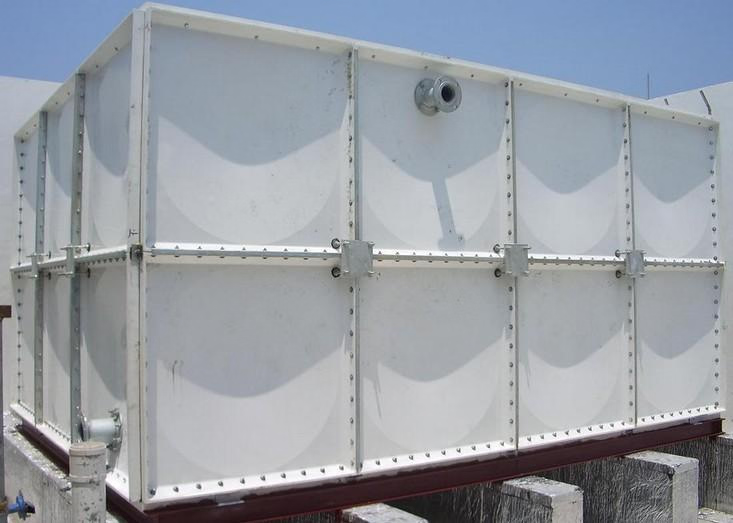
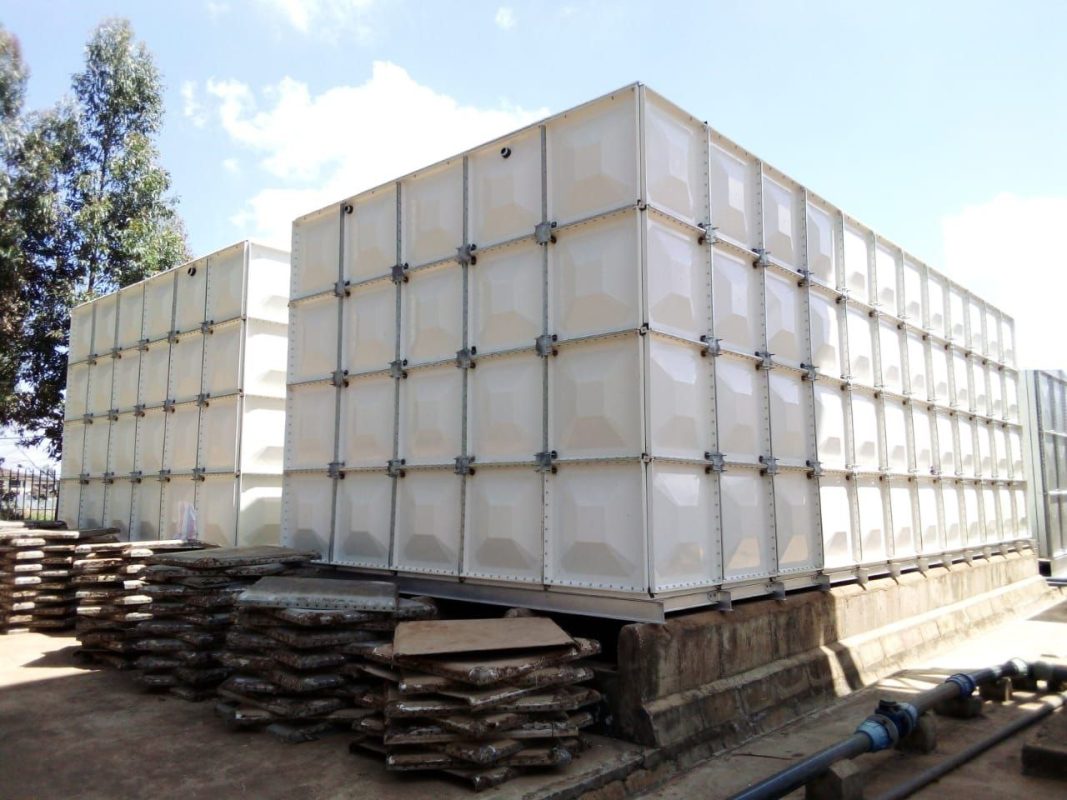
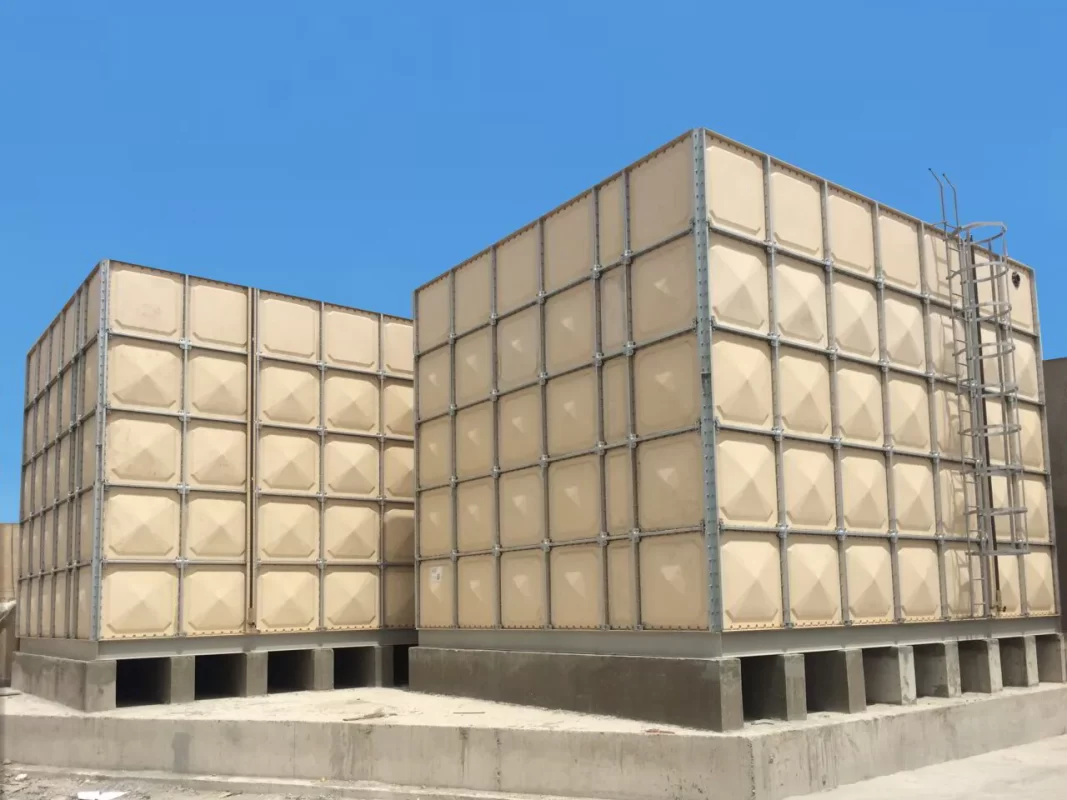
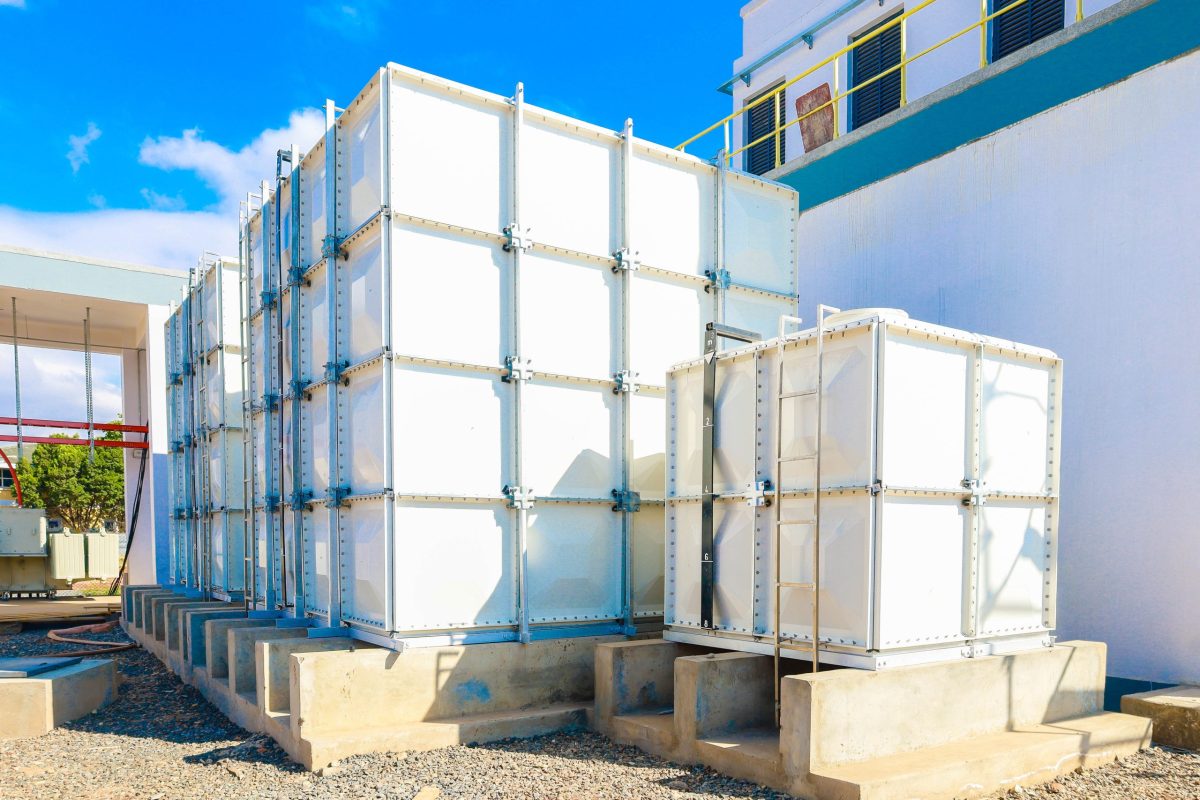
External tie rods are mounted outside the tank, connected across opposite panels using frames or support brackets.
🔧 How It Works:
-
Steel or galvanized rods are anchored on outer frames
-
Provide compressive support against outward pressure
-
The tank’s interior remains fully clear for storage and cleaning
✅ Advantages:
-
Full internal capacity utilization
-
Easier cleaning and maintenance
-
Reduced risk of internal corrosion
-
Suitable for large-capacity tanks and higher wall pressures
⚠️ Considerations:
-
Requires more installation space around the tank
-
Slightly higher cost due to external frame
-
Visual appearance may differ from compact designs
🏗️ Best For:
-
Large or high-volume tanks (above 2m in height)
-
Outdoor installations or dedicated plant rooms
-
Projects needing unobstructed internal space
🔗 Explore GRP tank reinforcement options
⚖️ Comparison: Internal vs External Tie Rods
| Feature | Internal Tie Rods | External Tie Rods |
|---|---|---|
| Space Requirement | Minimal | Requires external clearance |
| Internal Volume | Slightly reduced | Fully available |
| Cleaning & Hygiene | Moderate access | Easy access |
| Aesthetic Appearance | Clean exterior | Visible frame |
| Maintenance | Inside tank | Outside tank |
| Ideal Tank Size | Small to medium | Large capacity |
| Installation Location | Indoor / confined | Outdoor / open area |
🧱 Structural Integrity and Safety
Both reinforcement systems are designed to ensure the tank maintains its shape and strength under full water load. Aquosys tanks are engineered using finite element analysis (FEA) to verify structural performance based on:
-
Tank dimensions
-
Panel thickness
-
Water height
-
Pressure loads
-
Support structure design
This ensures your tank remains safe, stable, and leak-free for decades.
🔗 Learn about GRP engineering design
🌍 Applications Across East Africa
Aquosys GRP tanks with internal or external reinforcements are widely used in:
-
🏢 Commercial buildings
-
🏫 Schools and hospitals
-
🏗️ Industrial plants
-
🏠 Residential complexes
-
💧 Municipal and community water projects
Whether your project requires compact indoor storage or large outdoor capacity, we’ll design a reinforced tank system tailored to your needs.
🧰 Maintenance Tips
To ensure your reinforcement system remains in optimal condition:
-
Inspect rods, bolts, and nuts regularly
-
Tighten or replace corroded fasteners
-
Clean interior panels at least annually
-
Apply protective coating to steel rods if required
💡 Why Choose Aquosys GRP Tanks
✔ Engineered to international standards (BS 1564, ISO 9001)
✔ Custom-designed for your site and capacity
✔ High-quality fiberglass panels and resins
✔ Expert design, installation, and maintenance support
✔ Serving Kenya, Uganda, Tanzania, Rwanda, Ethiopia, South Sudan
📞 Contact Us Today
For professional guidance on selecting the right GRP tank reinforcement system, contact:
Aquosys Limited
📧 sales@aquosys.co.ke
📞 +254 754 750 750 | +254 729 749 749
🌐 https://aquosys.co.ke