
Concrete vs. GRP Tanks: Which is Better for Large Commercial Buildings?

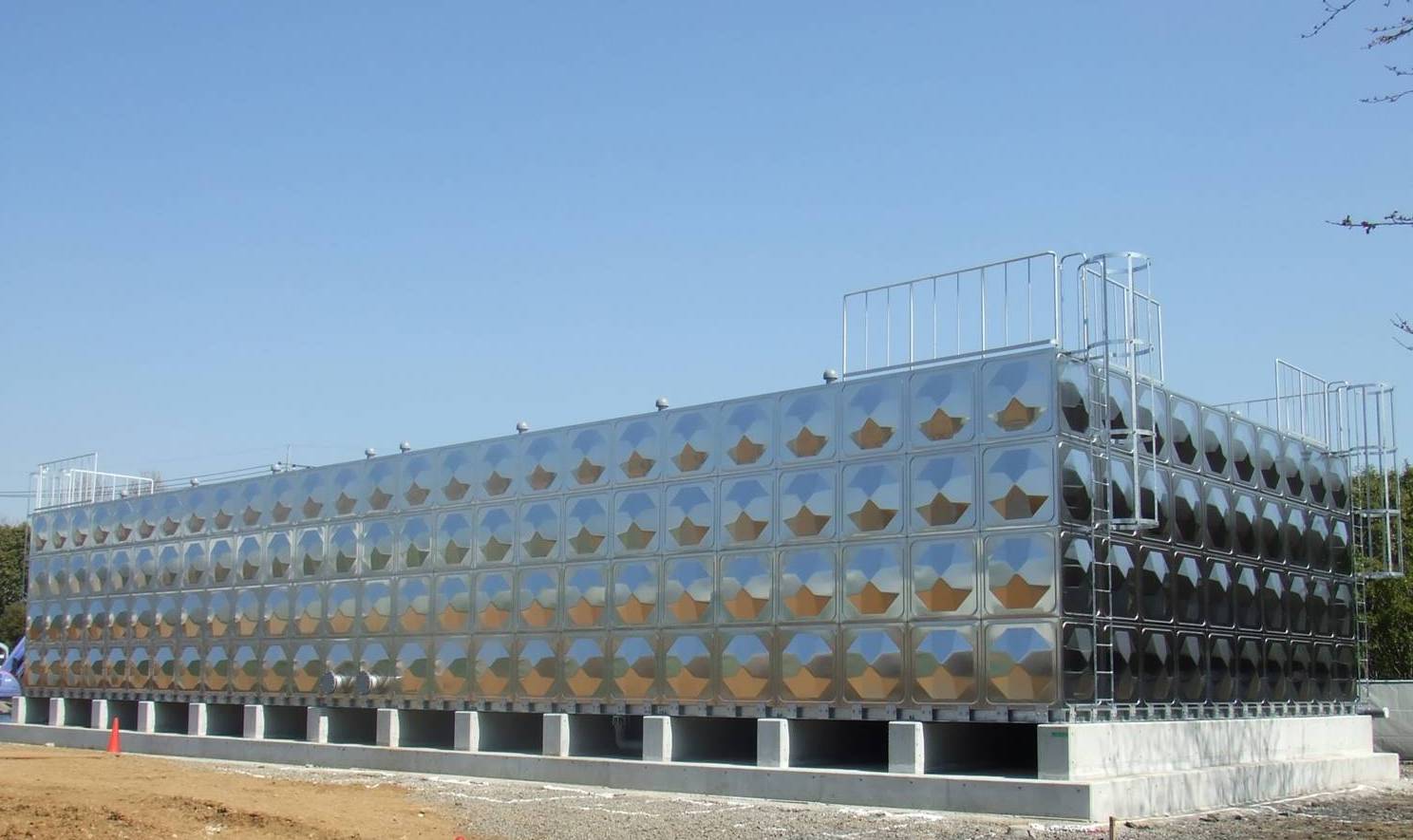
Introduction
Large commercial buildings — such as office towers, shopping malls, hotels, and mixed-use complexes — require reliable and efficient water storage solutions to meet demand for potable water, fire safety reserves, HVAC and plumbing systems, and general maintenance needs. Water storage in such structures must not only provide sufficient capacity, but also maintain water quality, minimize maintenance, and integrate with structural constraints (such as rooftop load limits or limited basement space).
For decades, concrete tanks have been the traditional choice for large-scale water storage. However, modern developments and stricter requirements for hygiene, structural flexibility, and long‑term cost efficiency have created demand for alternative materials. One of the most compelling alternatives is Glass Reinforced Plastic (GRP) — a composite material combining resin and glass fiber, offering notable advantages over concrete for many commercial and institutional applications. aquosys.co.ke+2goodwatertanks.com+2
In this article, we compare concrete tanks and GRP tanks — exploring their strengths, limitations, and suitability for large commercial buildings. The goal is to help building owners, developers, engineers, and project managers make an informed choice that balances structural, financial, and operational concerns. We will also highlight why GRP water tanks supplied and installed by Aquosys Limited are increasingly becoming the preferred solution for commercial projects across Kenya and East Africa.
If you are planning a large building and need a dependable water storage solution, you may wish to contact Aquosys Limited to request a quote or discuss customized design options.
GRP Water Tanks in Kenya: What They Offer
GRP water tanks are engineered using modular panels made of fiberglass‑reinforced resin, allowing high structural strength combined with light weight. This composite material delivers a high strength-to-weight ratio — meaning GRP tanks are considerably lighter than concrete tanks while offering robust water storage capacity. aquosys.co.ke+2Sungil Tanks Trading LLC+2
Key advantages of GRP tanks include:
-
Corrosion resistance and chemical stability: Unlike concrete (or steel), GRP does not corrode, rust, or degrade chemically when storing potable water or treated water. aquosys.co.ke+2REFINAR EAST AFRICA+2
-
Hygiene and water quality: The inner surface of GRP tanks is smooth and non-porous, minimizing bacterial growth, algae formation, or contamination — critical for drinking water storage in commercial buildings, hotels, hospitals, and institutions. Sungil Tanks Trading LLC+2goodwatertanks.com+2
-
Lightweight construction: Because GRP panels are much lighter than concrete, transport, handling, and installation become simpler, faster, and cheaper — which is especially advantageous in high-rise or rooftop installations. aquosys.co.ke+2Naran Precast Concrete Co.+2
-
Flexibility and scalability: GRP tanks can be configured to almost any size, shape, or footprint to fit within building structural constraints. This flexibility is important for commercial buildings where space may be limited or unconventional. leetani.com+2REFINAR EAST AFRICA+2
-
Reduced foundation requirements: Being lighter, GRP tanks often require less demanding support structures or foundations compared to heavy concrete tanks — a factor that can reduce civil works cost and simplify design. aquosys.co.ke+2aquosys.co.ke+2
-
Lower long‑term maintenance: GRP tanks do not need periodic sealing or relining, resist chemical and environmental degradation, and generally offer lower lifecycle maintenance compared to concrete tanks. aquosys.co.ke+2pipeco.cn+2
For these reasons — especially in Kenya’s urban and commercial building context — GRP water tanks are becoming an increasingly common choice for engineered water storage, where hygiene, structural flexibility, and long-term reliability matter. aquosys.co.ke+2aquosys.co.ke+2
Sectional GRP Water Storage Tanks: Ideal for Commercial Buildings
One of the features that makes GRP particularly well‑suited to commercial buildings is its modular or sectional design. Sectional GRP tanks are assembled from individual panels on-site, which are bolted or jointed together. This modularity offers significant advantages over monolithic concrete tanks:
-
On‑site assembly allows delivery of panels even in constrained or difficult-to-access urban sites (narrow roads, basements, rooftops), avoiding the need for heavy lifting equipment or large transport logistics. aquosys.co.ke+2goodwatertanks.com+2
-
The modular nature enables customization — size, capacity, shape — to match building layout, storage needs, and future expansion plans. leetani.com+1
-
Maintenance or repairs can target specific panels or joints, rather than requiring complete deconstruction as with concrete tanks. REFINAR EAST AFRICA+2Sungil Tanks Trading LLC+2
-
Installation speed is greatly improved: what might take weeks to cast and cure with concrete can be done in days with GRP sectional tanks. aquosys.co.ke+1
For large commercial buildings — especially high‑rises or structures with limited on‑site access — sectional GRP tanks often provide the most practical and cost‑effective water storage solution.
Concrete Tanks: Strengths and Limitations
Concrete tanks — whether cast in place or precast — have long been used for water storage in large buildings, industrial plants, and municipal systems, and they offer certain strengths:
-
Structural rigidity and strength: Concrete tanks can handle very large capacities and can be built underground or above ground depending on design. aquosys.co.ke+2GSC Tanks+2
-
Potentially long lifespan: A well-built concrete tank can last decades — although longevity depends heavily on quality of construction, waterproofing, and maintenance. aquosys.co.ke+2GSC Tanks+2
-
High load-bearing capacity: For fixed, permanent installations — e.g. large underground reservoirs, built-in basements — concrete offers a stable, immobile, high-capacity solution. aquosys.co.ke+2agriculture.coerco.com.au+2
However, concrete tanks also come with significant limitations that affect their suitability for many modern commercial buildings:
-
Weight and foundation requirement: Concrete tanks are very heavy and require reinforced foundations or slabs — which can add significant civil works cost, especially in rooftop or high‑rise settings. aquosys.co.ke+2GSC Tanks+2
-
Long and complex installation process: Concrete construction involves formwork, reinforcement, curing, waterproofing, and leak‑testing — often resulting in weeks of work. aquosys.co.ke+2agriculture.coerco.com.au+2
-
Risk of cracks, leakage, and seepage: Concrete is porous and, over time or with structural settlement/temperature variation, can crack — leading to leaks, seepage, or water contamination if not properly lined and maintained. GOV.UK+2GSC Tanks+2
-
Maintenance burden: To keep a concrete tank watertight and safe, periodic waterproofing, re‑lining, or sealing may be required — increasing long-term maintenance cost and complexity. aquosys.co.ke+2GSC Tanks+2
-
Potential for water quality issues: Concrete surfaces may leach lime or other minerals, possibly affecting taste or pH of stored water; concrete porosity can also foster microbial growth if not adequately sealed. GSC Tanks+2agriculture.coerco.com.au+2
Given these constraints, concrete tanks are often better suited for permanent, large-capacity underground reservoirs or installations where structural load and long‑term permanence outweigh flexibility, maintenance, and hygiene concerns.
Side-by-Side Comparison: Concrete vs. GRP Tanks for Commercial Buildings
| Criteria / Factor | Concrete Tanks | GRP Tanks |
|---|---|---|
| Structural Weight & Foundation Load | Very heavy → Requires reinforced slab/foundation GSC Tanks+1 | Lightweight → Requires minimal foundation support aquosys.co.ke+1 |
| Installation Time & Complexity | Long: formwork, reinforcement, curing, waterproofing; several weeks aquosys.co.ke+1 | Fast: modular assembly on-site; days instead of weeks aquosys.co.ke+1 |
| Customisation / Flexibility | Fixed design; limited flexibility after construction agriculture.coerco.com.au+1 | Highly flexible: size, shape, capacity adjustable per project needs leetani.com+1 |
| Maintenance / Long-term Costs | High: possible cracking, waterproofing, re-lining, leak repair aquosys.co.ke+2GSC Tanks+2 | Low: corrosion-free, non-porous surface, minimal upkeep aquosys.co.ke+2pipeco.cn+2 |
| Water Hygiene & Quality | Risk of seepage, microbial growth if not sealed properly GSC Tanks+1 | High: smooth non-porous inner surface, safe for potable water REFINAR EAST AFRICA+2Sungil Tanks Trading LLC+2 |
| Lifespan | Long (if maintained): 30–50 years possible but depends on waterproofing aquosys.co.ke+1 | Durable: 25–40 years or more with minimal maintenance aquosys.co.ke+2aquosys.co.ke+2 |
| Suitability for High-rise / Rooftop / Tight Spaces | Poor: heavy weight and foundation demands make rooftop installs impractical | Excellent: lightweight, modular — ideal for rooftops, basements, or unconventional spaces aquosys.co.ke+1 |
From this comparison, it becomes clear that while concrete tanks remain useful for large, permanent underground reservoirs or extremely high-capacity installations, GRP tanks offer a more versatile, cost-effective, and practical solution — especially for modern commercial buildings, high‑rises, or projects with structural or space constraints.
When Concrete Tanks Still Make Sense
Despite the advantages of GRP, there remain scenarios where concrete tanks may be the more appropriate choice:
-
Underground or large-capacity municipal reservoirs where weight and structural permanence are acceptable, and where ground-based installation is easier than modular assembly.
-
Fixed civil infrastructure projects needing long-term stability with minimal risk of damage or displacement.
-
Projects with minimal hygiene requirements or where water is non-potable (e.g. raw water storage, industrial buffer storage) — though even here, corrosion, seepage, or maintenance must be considered.
-
Very large capacities that exceed typical modular GRP tank dimensions, or where project budget favors simpler materials assuming adequate maintenance and waterproofing.
However, even in such cases, one must account for higher foundation and civil works cost, longer construction time, maintenance overhead, and potential water quality risks over the lifespan of the tank. aquosys.co.ke+2GSC Tanks+2
Why GRP Tanks — Especially From Aquosys Limited — Are Often the Best Choice for Commercial Buildings
Given the demands of modern commercial buildings — from high‑rise offices, hotels, malls to mixed-use developments — GRP water tanks offer many advantages:
-
Lightweight & Flexible Installation: Their modular design means GRP tanks can be installed even on rooftops, mezzanine floors, or basements — places where heavy concrete tanks would be impractical.
-
Hygiene & Water Quality: Smooth, non-porous interior surfaces reduce risk of bacterial growth, contamination, and water quality degradation — critical for potable water supply in commercial and institutional buildings.
-
Reduced Total Cost of Ownership: Lower maintenance, minimal civil works, reduced foundation requirements, and long service life translate to lower long-term costs compared to concrete.
-
Faster Deployment: For commercial projects under tight schedules, GRP tanks can be assembled quickly — avoiding delays associated with concrete curing, waterproofing, and testing.
-
Scalability & Customization: Whether for small rooftop storage or large basement reservoirs, GRP tanks can be tailored to fit the building’s design, capacity needs, and future expansion plans.
Aquosys Limited specializes in manufacturing and installing GRP water tanks tailored to East African conditions — combining high‑quality materials, engineering expertise, and project support across Kenya, Uganda, Tanzania, Rwanda, South Sudan, Ethiopia, and beyond. Their experience with commercial buildings ensures professional design, installation, and long-term support.
For building developers, engineers, or facility managers seeking reliable water storage solutions, GRP tanks from Aquosys offer an optimal balance of performance, cost, flexibility, and hygiene.
Conclusion
For large commercial buildings, the choice between concrete and GRP tanks depends largely on project context, capacity needs, structural constraints, and long-term requirements. While concrete tanks remain a traditional solution — especially for large underground reservoirs or projects where heavy civil works are acceptable — GRP tanks offer substantial advantages in flexibility, hygiene, installation speed, and long-term cost-effectiveness.
In many modern commercial building scenarios — high-rises, rooftop storage, space-limited basements, or developments requiring potable water storage — GRP tanks represent a smarter, more efficient, and future‑proof solution. When supplied and installed by a trusted provider like Aquosys Limited, GRP tanks can provide years of reliable water storage with minimal maintenance, excellent water hygiene, and reduced structural burden.
If you are planning a commercial building and want a water storage solution that combines quality, durability, and cost-efficiency — consider GRP. To explore options, get a customized quote, or discuss project requirements: Contact Aquosys Limited today.
Email: sales@aquosys.co.ke
Phone: +254 754 750 750 | +254 729 749 749

